No results found, please try a different search term.
For multinational corporations managing diverse facility portfolios, workplace safety isn't just a compliance requirement. It's a strategic imperative that impacts operational continuity, employee wellbeing and business performance.
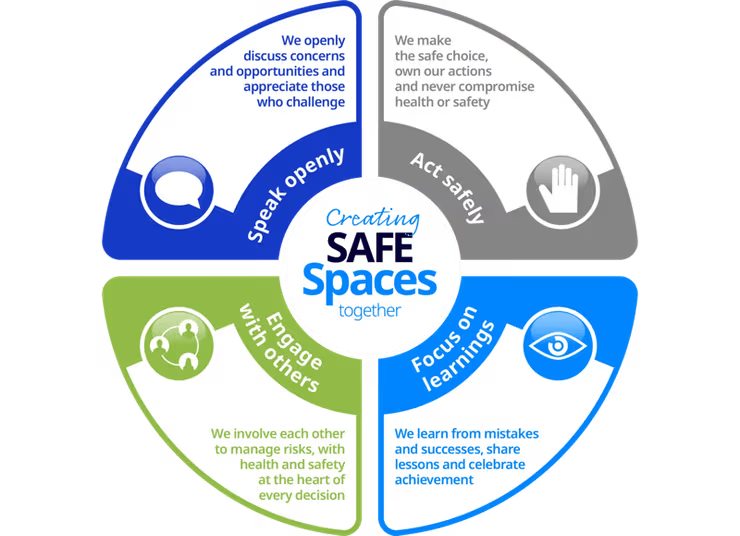
At ISS, the health, safety, and environment (HSE) strategy, ‘Creating SAFE Spaces together’, is deliberately aligned with the company's core mission: to make spaces for people and businesses to thrive.
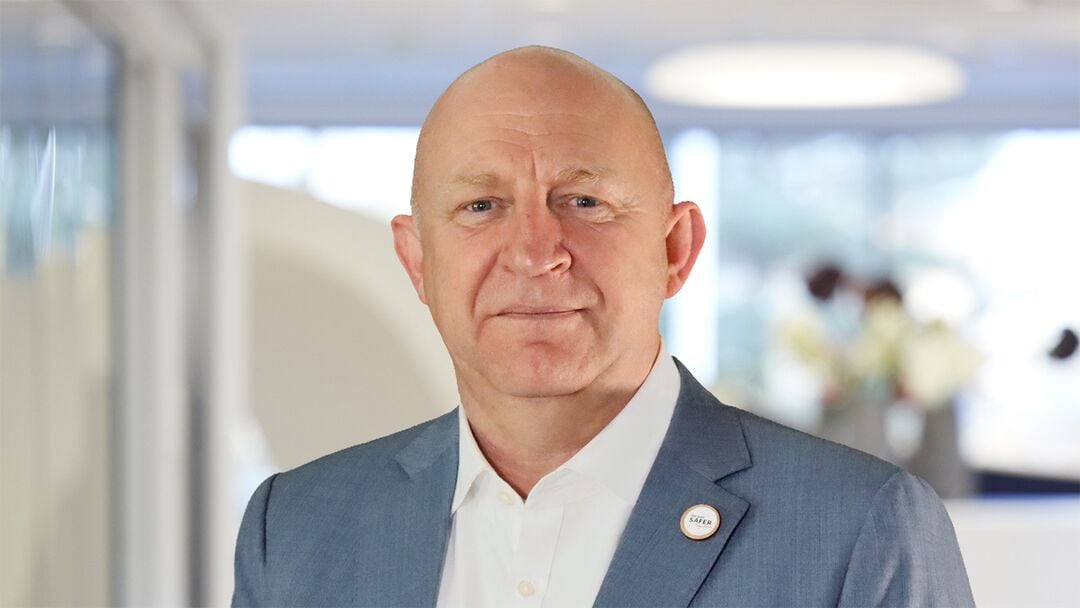
As Mick Moore, Global Head of HSEQ at ISS, explains: “When customers partner with ISS, they don't just get facility management services. They get ISS’ safety culture embedded into their operations. That's a genuine differentiator in our industry.”
Psychological safety as a foundation
At the heart of ISS' strategy lies a safety identity emphasising behaviours represented by the acronym SAFE: Speak Openly, Act Safely, Focus on Learnings and Engage with Others.
The 'Speak Openly' element is particularly powerful in creating environments where employees at every level can voice concerns, identify hazards and share innovative ideas with the confidence that they will be listened to.
"Psychological safety is about enabling individuals to have a voice," says Mick. "The art of listening is a critical leadership quality in HSE. We want people to come to work knowing they'll be listened to and really heard. Our frontline placemakers understand operations better than anyone, so when we give them a psychologically safe environment where they feel confident speaking up, we learn more about our organisation and can continuously improve."
This culture of openness doesn't just prevent incidents, it drives innovation and service quality across customer sites.
“When customers partner with ISS, they don't just get facility management services. They get ISS' safety culture embedded into their operations."
Mick Moore, Global Head of HSEQ at ISS
Global consistency meets local flexibility
For multinational customers managing operations across multiple jurisdictions, consistent safety standards and controls are essential. ISS addresses this challenge through a risk-based management system that applies global minimum standards while accommodating regional regulatory requirements.
"Our role is the prevention of harm to people and harm to the environment – those are the two fundamentals that underpin everything," Mick states. "We've written minimum global standards that apply regardless of local legislation. We then compare these to legal requirements in each jurisdiction. If local legal requirements are higher, we add local amendments to our minimum standards to meet them."
This approach provides customers with consistent, auditable safety performance across their entire portfolio while ensuring full compliance with local regulations – eliminating the complexity of managing multiple regional standards.
From reactive to proactive safety management
Traditional safety programmes often focus on lagging indicators, measuring accidents after they occur. ISS has invested significantly in modernising HSE management systems to shift toward predictive, proactive safety management.
"If you can't measure it, you can't manage it," says Mick. "We're using both leading and lagging indicators to create a risk-based approach. When we plot these together, we can identify where teams might be succeeding through luck rather than robust systems, or where they're implementing the wrong controls despite good intentions."
Recent investments include comprehensive upgrades to incident reporting systems, auditing platforms, and permit-to-work processes. All are designed to be more accessible to frontline workers while providing sophisticated analytics to proactively identify risk and demonstrate compliance across customer portfolios.
This data-driven approach allows ISS to identify potential issues before incidents occur and direct resources where they'll have the greatest impact.
“Psychological safety is about enabling individuals to have a voice. We want people to come to work knowing they'll be listened to and really heard."
Mick Moore, Global Head of HSEQ at ISS
Self-delivery as a safety differentiator
ISS predominantly self-delivers services through its own trained workforce. This provides a significant safety advantage, as Mick explains: "Self-delivery means we have direct access to our employees. We define their training, track their completion and embed our safety culture into everything they do. We train them on the specific hazards they'll face in their roles and on the safety behaviours we expect."
That means customers get teams who have safety at the forefront of their minds – not just technically competent workers, but people who bring an intelligent, safety-driven culture to every site.
Measuring cultural transformation
ISS has moved beyond fixed KPIs to measure continuous improvement through an annual safety culture survey that provides direct insight from frontline employees.
The results demonstrate measurable progress. The inaugural survey in 2024 generated 71,000 responses globally, establishing a baseline and identifying opportunities for improvement. The following year saw nearly 80,000 responses and approximately 10-point improvements across all focus areas.
"We won't move culture overnight," Mick acknowledges. "We need to bring people on the journey with us through gradual, sustained improvement. But we can clearly demonstrate that focused effort in specific areas delivers measurable results. The great thing about this survey is that it's direct feedback from our placemakers, giving them a true voice at ground level."
Following survey responses highlighting concerns about safety rules and procedures, ISS completely rewrote its HSE management system to provide clearer minimum controls and expectations, while strengthening site-based risk assessment programmes.
“We won't move culture overnight. We need to bring people on the journey with us through gradual, sustained improvement."
Mick Moore, Global Head of HSEQ at ISS
Focusing on learnings
The power of ISS' learning culture recently prevented potentially serious incidents at a major manufacturing customer. Following a serious incident at one location where a placemaker came into contact with an unguarded conveyor belt, ISS immediately shared learnings globally and conducted safety stand-downs across every country operation.
"Teams then proactively looked for similar hazards in the portfolio where they delivered services," Mick recounts. "At one large manufacturing customer, the site team identified two similar scenarios at its sites. After highlighting the risks, the customer added additional guarding based on our recommendations, preventing incidents before they happen. That's the value of our 'Focus on Learnings' principle – sharing both positive and negative lessons, from one location and protecting people across our entire global operation."
Key principles for enhancing corporate safety programmes
• Create psychological safety where employees can speak openly without fear of retribution
• Establish global minimum standards with flexibility to meet local regulatory requirements
• Use leading and lagging indicators together to predict and prevent incidents
• Measure safety culture through regular, consistent employee engagement
• Share learnings globally to prevent incidents across all sites
• Embed ownership of safety in operations; the HSE team is there to provide professional support and advice.
Head of Group HSEQ at ISS
Mick Moore
A global HSE leader with proven experience delivering practical, high‑impact HSE strategies across complex, multi‑country operations. Brings strong expertise in HSE performance, culture change, compliance and operational leadership.